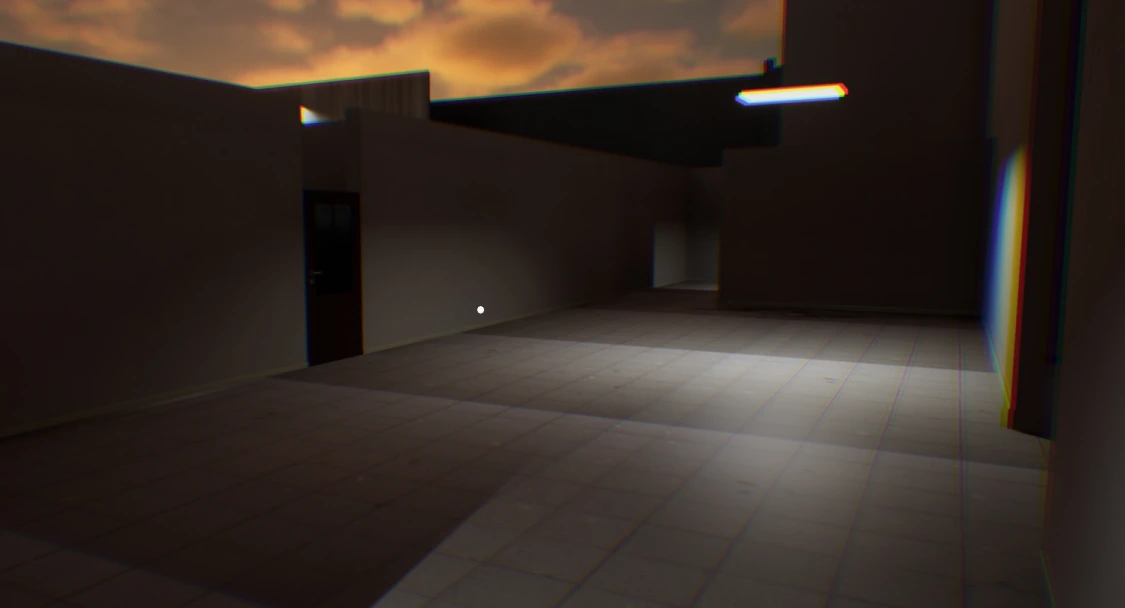
School
The plan identifies a single-floor school area. Repeating doors and tile patterns provide the basis for a familiar but unsettling space. Navigation readability is an intended design question, not a measured outcome.
 DAI YONG
Read familiar spaces again when their rules begin to change.
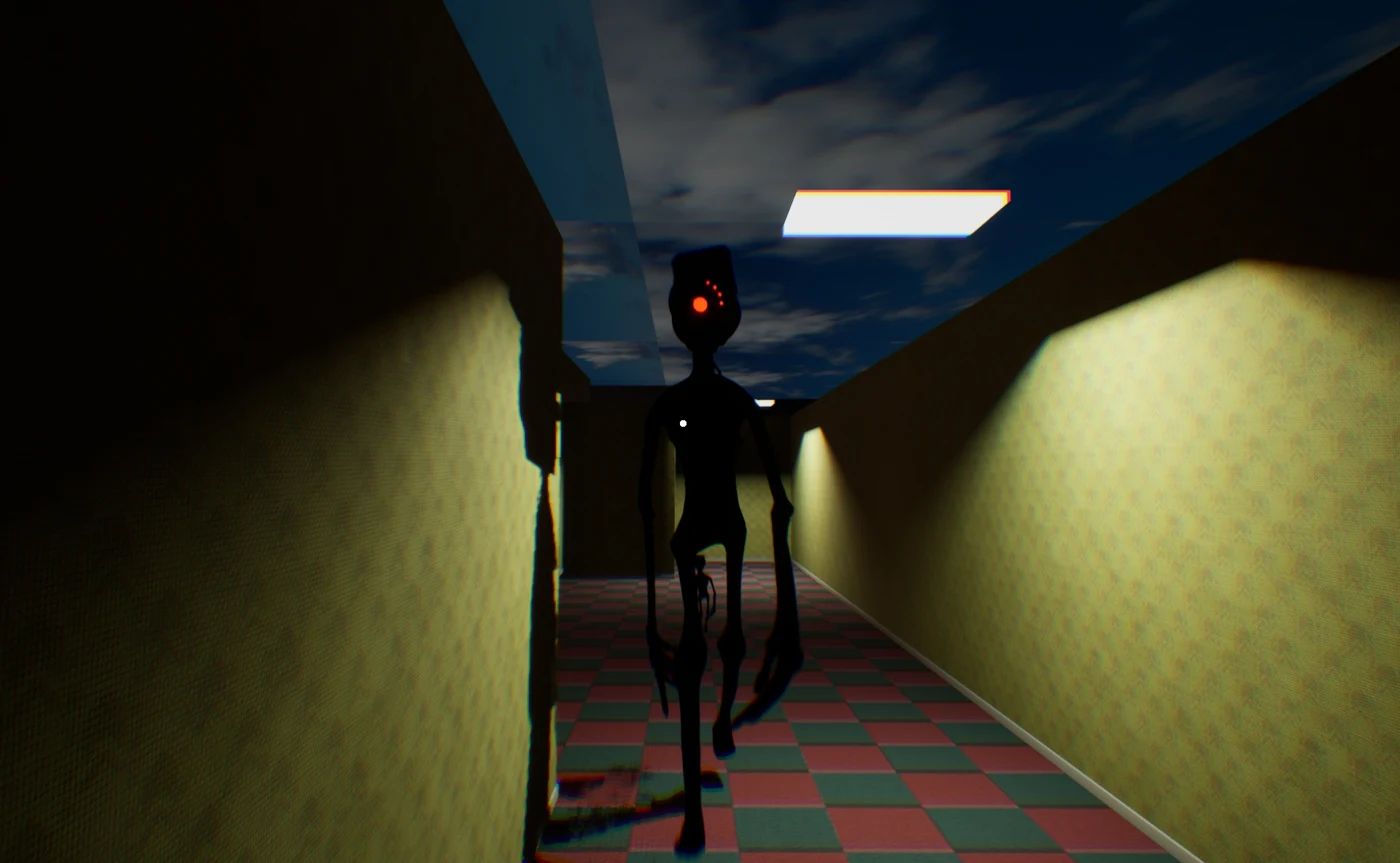
A first-person exploration game built around a school, an amusement park and an office. Doors, repeated spaces and changing conditions are intended to make the player reconsider what they remember. The work shown here documents the spatial plan, environment development and Blueprint systems.
Interactive environment study
Compare the three documented environments and their design intentions. The plan is an archived layout; it does not establish a current playable route or a before/after world-state pair.
Select one of three documented environments. The static images and explanations remain available below.
Interactive controls load when this section is reached. If scripts are unavailable, use the images and explanations below.
The plan identifies a single-floor school area. Repeating doors and tile patterns provide the basis for a familiar but unsettling space. Navigation readability is an intended design question, not a measured outcome.
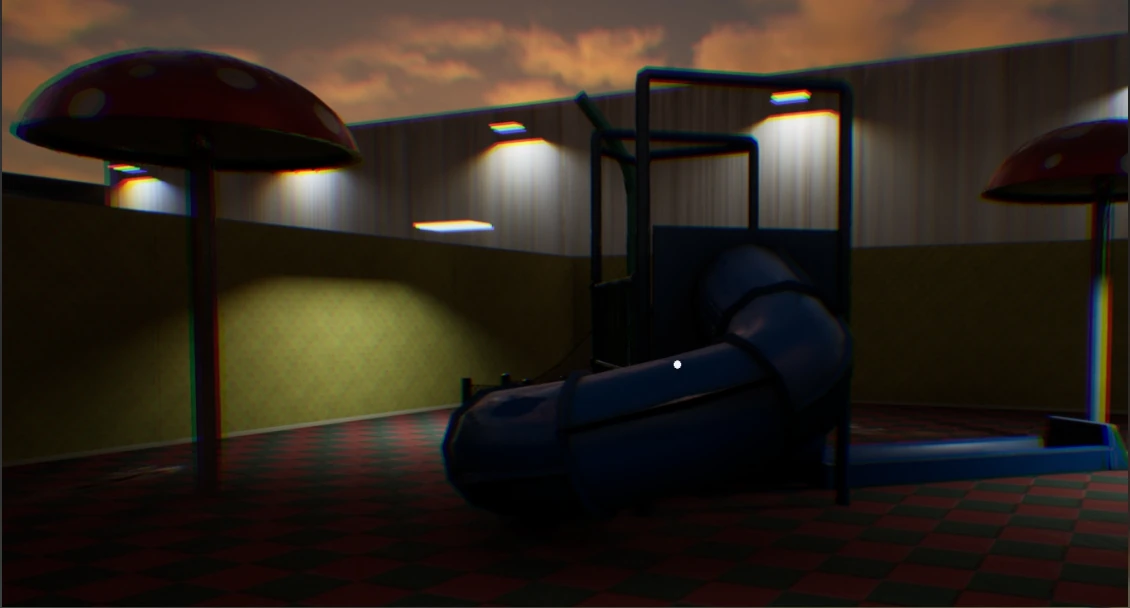
The park is planned as an outdoor-feeling space enclosed by walls and a painted sky. Ride props act as scenery. The contrast between playful objects and artificial enclosure is part of its visual identity.
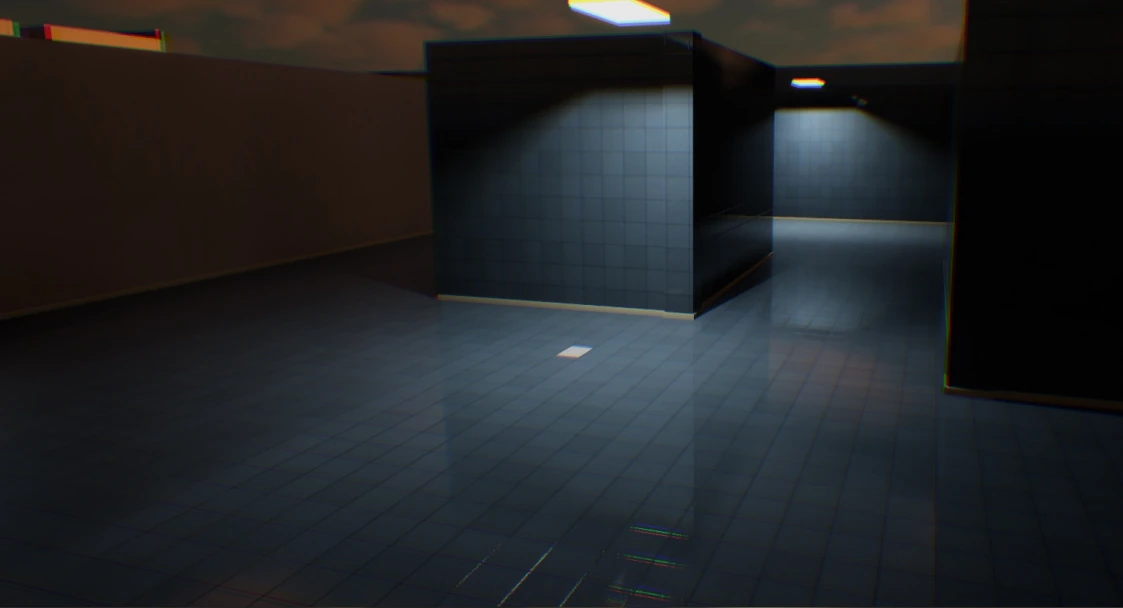
The office stage is described through darkness, empty floors and a search for a breaker switch. The available plan does not locate a separate office footprint, so this image is presented as a stage reference rather than a mapped route.
A question, a choice and the evidence behind it.
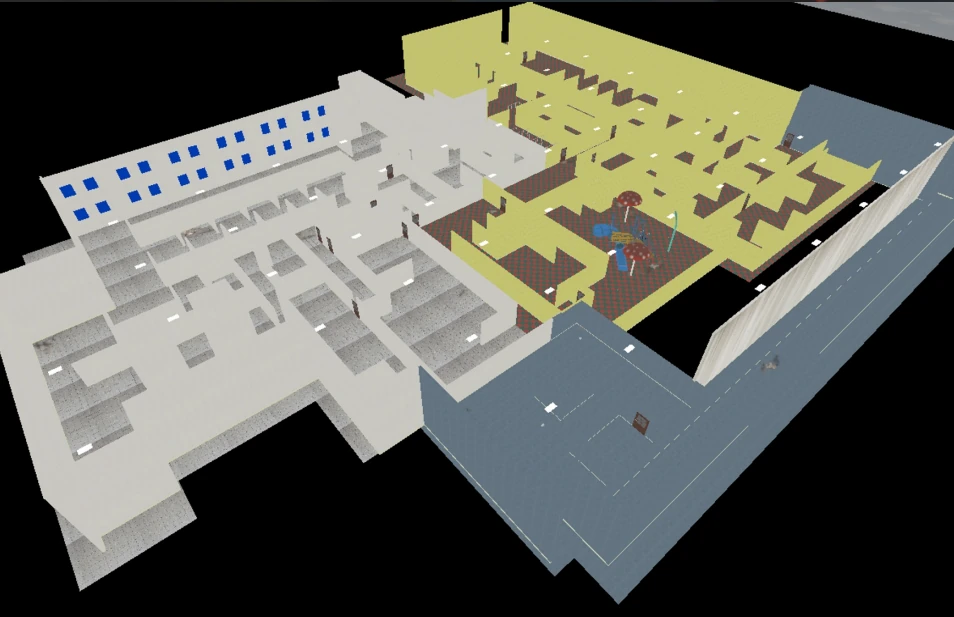
The level plan connects a classroom area and amusement park through a long corridor, with an office stage described later in the sequence. The whitebox shows how rooms, openings and enclosing walls organize that spatial structure. It is a design plan, not a verified route recording.
Repeated tiles, doorways and ceiling lights establish familiar patterns. Changes in scale, lighting and enclosure are intended to disturb that familiarity. The environment images show this visual approach; whether players notice and use the intended cues remains a playtest question.
The documented Blueprint work includes player movement, stage changes, lighting updates and Blackboard data. The next case-study step is to connect one precise state transition to a continuous gameplay capture, so its effect can be followed from input to result.
The current material establishes the level's visual and spatial direction. A consolidated build description is still needed to resolve the different chase triggers and key/crystal progression described in the portfolio. A focused navigation test should then examine which landmarks players remember and how they respond to a changed route; no test result is claimed here.
暂无。A matched before-and-after pair, the reason for the change and the observations behind it will be added together. Current images document the project; they are not presented as measured improvement.
暂无。The verified files, version and instructions will appear here when ready.
暂无。A continuous demonstration with a text description is still to be supplied.
Portfolio source pages: 2, 4, 5, 6, 8, 9, 10. Project dates reproduce the portfolio labels; they do not state production duration.